

Industrial Chiller Manufacturers In China
Welcome to GESON Chiller, a leading provider of industrial chillers designed to meet the cooling needs of various industries. With a strong focus on efficiency, reliability, and advanced technology, our industrial chillers are trusted by businesses worldwide.
At GESON Chiller, the best industrial chillers, we understand the critical role that precise temperature control plays in industrial processes. Our industrial chillers are engineered to deliver exceptional performance, ensuring optimal cooling for your applications. With a wide range of cooling capacities and temperature control options, our chillers can meet the demands of diverse industries such as manufacturing, pharmaceuticals, food processing, and HVAC systems.
What sets our industrial chillers apart is their energy efficiency and innovative features. Our chillers are built with state-of-the-art components and advanced refrigeration systems that maximize cooling efficiency while minimizing energy consumption. This not only helps reduce operational costs but also contributes to a sustainable and eco-friendly approach.
Reliability is at the core of our industrial chillers. We prioritize durability and robustness, ensuring that our chillers can withstand demanding industrial environments. Our commitment to quality means that our chillers are built to last, providing you with years of reliable cooling performance.
At GESON Chiller, we believe in delivering exceptional customer satisfaction. Our team of experts is dedicated to providing personalized solutions tailored to your specific requirements. We offer comprehensive support, including installation guidance, maintenance services, and prompt technical assistance to keep your chiller operating at peak performance.
Discover the power of the best industrial chillers and experience efficient cooling solutions that enhance productivity and optimize your processes. Contact us today to discuss your cooling needs, request a quote, or schedule a consultation.
GESON Industrial Chiller – Your Trusted Partner for Industrial Cooling Solutions.

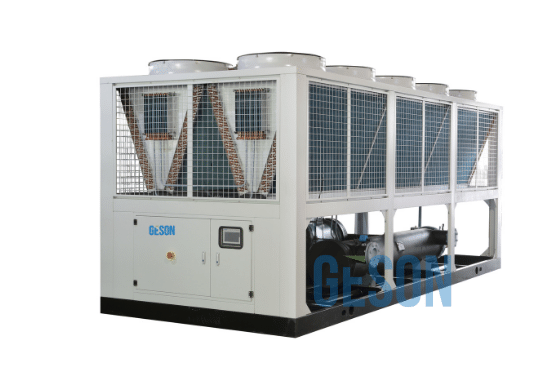
Industrial Air Chiller
Introducing Industrial Air Cooled Water Chiller
- Efficient cooling solution for various industrial processes.
- Versatile applications in manufacturing, plastics, food processing, and more.
- Utilizes air-cooled technology, no constant water supply is needed.
- Compact design, suitable for space-constrained environments.
- Energy-efficient with smart monitoring systems.
- Customizable options for specific cooling needs.
- Environmentally friendly with eco-friendly refrigerants.
- Reliable brands offer warranties and excellent support.

Industrial Water Chiller
Related Products


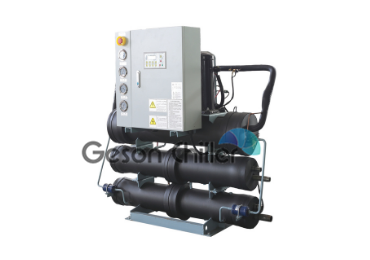
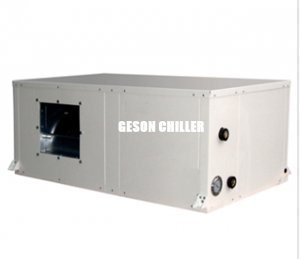

Difference of COP, EER, APF, SEER, IPLV, NPLV of Air Conditioning Heat Pump Chiller 1. COP (COP=cooling capacity/compressor electric power) The COP value (cooling efficiency) is actually the ratio of the cooling capacity (heating [...]
As a business owner or IT manager, do you know the importance of keeping your server room warm? The computer room is the core part of your network system, where all key data and information [...]
How Water-cooled Condensers Work? What is a water-cooled condenser? A water-cooled condenser employs water as a cooling medium, and the heat of condensation is transferred away through the temperature rise of the water. Cooling water [...]
Advantages of Geson Chiller
We want to be your expert chiller manufacturer in China
All Types of Water Cooler Industrial Products
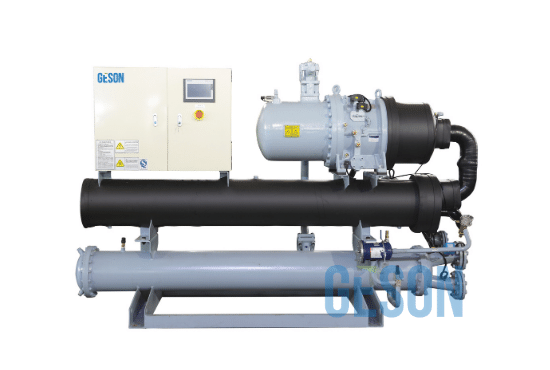
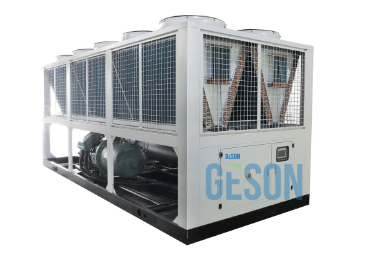

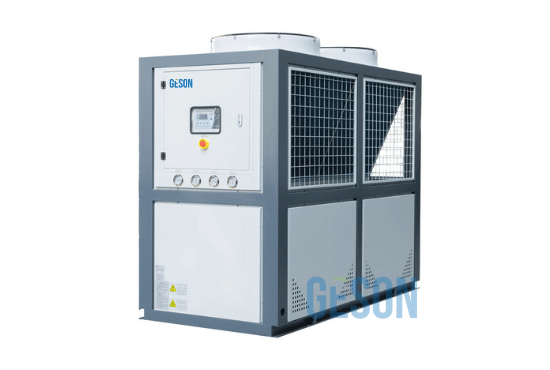

Modular Air Chiller

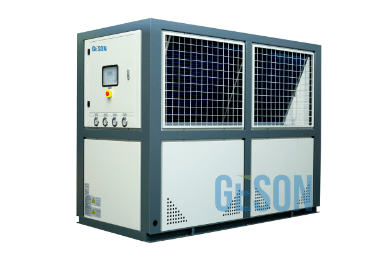
Air Source Heat Pump

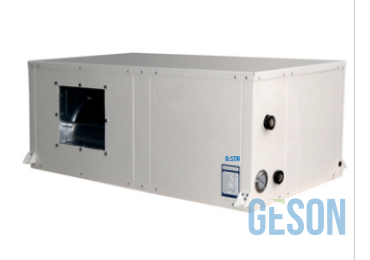
Water Source Heat Pump
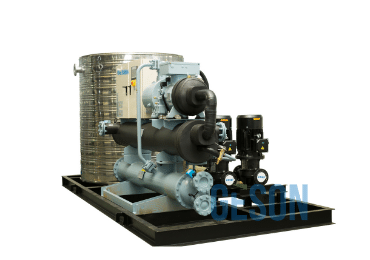
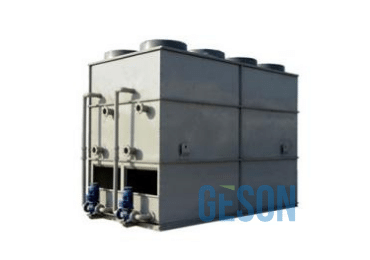
Water Cooling Tower

Air Coditioning Chiller
Your Top Quality Chillers Manufacturer In China
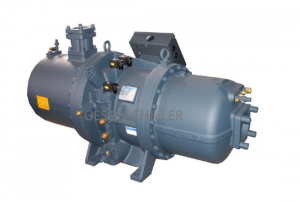
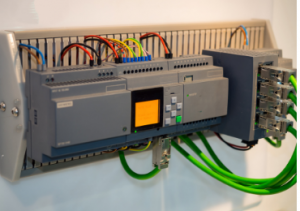
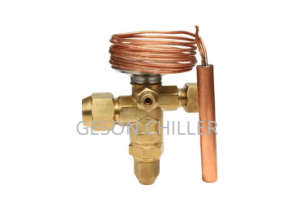
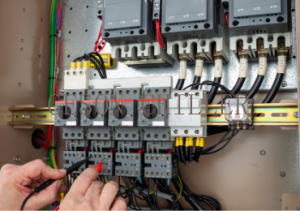
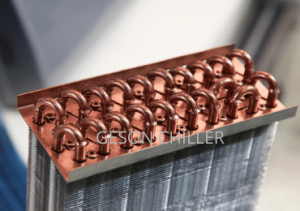
Top Brand Components
Ensure Your Top Quality Chiller

Applications
Chiller For Plastic Industrial

Beer And Wine Fermentation Chiller

Chemical Processing Chiller

Computer Data Center Chiller

Food And Dairy Chiller

Hotel HVAC Chiller

MRI And Laser Chiller

Pharmaceutical-Formulation-chiller
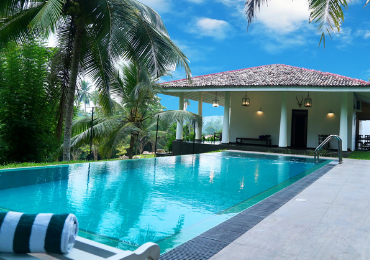
Swimming-Pool-chiller
Water Cooled Chiller Manufacturer — 30TR to 4500TR
Geson Chiller has manufactured water cooled chillers for industrial and commercial applications for over 15 years. Our water cooled chiller systems are available from 30TR to 4500TR, with outlet temperatures from -45°C to 25°C, and are shipped to customers across North America, Europe, the Middle East, and Southeast Asia.
Every unit is factory-tested before shipment. Lead time is 15 days for standard configurations. Custom designs are available for non-standard cooling requirements.
Water Cooled Chiller Specifications
| Parameter | Specification |
|---|---|
| Cooling Capacity | 30TR ~ 4,500TR (105kW ~ 15,820kW) |
| Outlet Water Temperature | -45°C ~ 25°C (-49°F ~ 77°F) |
| Compressor Types | Screw / Scroll / Centrifugal |
| Refrigerants | R134A, R407C, R410A, R454B |
| Condenser Type | Shell and tube heat exchanger |
| Evaporator Type | Dry type / Flooded type |
| Control System | Siemens PLC, touch screen, Modbus-RTU |
| Power Supply | 3-phase 380V/50Hz (customizable) |
| Lead Time | 15 days (standard) / negotiable (custom) |
| Energy Adjustment | 0% / 25% / 50% / 75% / 100% |
| MTBF | ≥ 40,000 hours failure-free operation |
Water Cooled Chiller Types
Water Cooled Screw Chiller — 100TR to 4,500TR
The water cooled screw chiller is Geson’s most widely deployed product for large industrial and commercial applications. Twin-screw compressors from leading European and American brands provide efficient, low-vibration operation across wide load ranges. Suitable for pharmaceutical clean rooms, data centers, large HVAC plants, and industrial process cooling above 100TR.
- Capacity: 100TR ~ 4,500TR
- Compressor: twin-screw, stepless capacity modulation
- Best for: large industrial plants, central HVAC, district cooling
Water Cooled Scroll Chiller — 3TR to 180TR
For small and medium process cooling requirements, the water cooled scroll chiller offers a compact footprint with low noise and minimal maintenance. Uses Copeland, Daikin, or Danfoss scroll compressors. Each unit includes a built-in water tank and pump for easy installation.
- Capacity: 3TR ~ 180TR
- Outlet temperature: -15°C ~ 30°C
- Best for: food and beverage, injection molding, laboratory cooling, small HVAC
Water Cooled Centrifugal Chiller — 300TR to 4,500TR
Geson centrifugal chillers are designed for large-scale central air conditioning and district cooling applications where high efficiency at full load is the priority. Magnetic bearing options available for oil-free operation and reduced maintenance costs.
- Capacity: 300TR ~ 4,500TR
- Best for: large hotels, hospitals, airports, district cooling
Water Cooled vs Air Cooled Chiller — Which Do You Need?
| Factor | Water Cooled Chiller | Air Cooled Chiller |
|---|---|---|
| Energy Efficiency | Higher (10~15% more efficient) | Lower |
| Installation | Requires cooling tower + machine room | Easier, outdoor installation |
| Capacity Range | 30TR ~ 4,500TR | 5TR ~ 630TR |
| Operating Cost | Lower long-term | Higher long-term |
| Water Supply | Required | Not required |
| Best For | Large installations, indoor plants | Small/medium, outdoor use |
| Climate | All climates | Cooler / dry climates preferred |
Rule of thumb: If your cooling requirement is above 150TR and you have access to a water supply, a water cooled chiller will almost always have a lower total cost of ownership over 10 years than an air cooled alternative.
Industries We Serve
| Industry | Typical Application | Typical Capacity |
|---|---|---|
| Pharmaceutical | Clean room cooling, reactor temperature control | 50TR ~ 500TR |
| Food & Beverage | Process cooling, fermentation, cold storage | 30TR ~ 300TR |
| Plastics & Injection Molding | Mold cooling, extruder cooling | 10TR ~ 200TR |
| Data Centers | Server room cooling, precision cooling | 100TR ~ 2,000TR |
| Chemical | Reactor cooling, solvent recovery | 50TR ~ 1,000TR |
| Ice Rinks | Ice surface refrigeration | 100TR ~ 800TR |
| HVAC / Commercial | Hotels, hospitals, shopping malls | 100TR ~ 4,500TR |
| Printing | Press roller cooling, ink temperature control | 20TR ~ 100TR |
Why Buy a Water Cooled Chiller from Geson?
- 15+ years manufacturing experience — over 10,000 projects completed globally
- Full capacity range — 3TR to 4,500TR in a single product family
- Factory tested — every unit run-tested before shipment; 47-point QC inspection
- 15-day lead time — for standard configurations; custom designs available
- Siemens PLC control — Modbus-RTU ready for BMS integration
- Global shipping — wooden case packaging with transport insurance included
- 24/7 after-sales support — 30-minute response, 2-hour solution, 24-hour on-site (China); remote support globally
Frequently Asked Questions
What is a water cooled chiller?
A water cooled chiller is a refrigeration system that removes heat from process water or air using water as the condensing medium, typically in conjunction with a cooling tower. It operates on a vapor-compression refrigeration cycle using a compressor, condenser, expansion valve, and evaporator.
How does a water cooled chiller work?
The chiller’s compressor pressurizes refrigerant gas, which then flows to the shell-and-tube condenser where cooling tower water removes the heat and condenses the refrigerant to liquid. The liquid refrigerant passes through an expansion valve, evaporates in the evaporator, and absorbs heat from the process water — cooling it down to the setpoint temperature. The cycle repeats continuously.
What size water cooled chiller do I need?
Calculate your cooling load in BTU/hr and divide by 12,000 to get tons. As a rough guide: a 100TR chiller handles approximately a 10,000 m² office building, a 50TR unit covers a mid-size industrial process, and units above 500TR are typically used for large central plant or district cooling. Contact Geson with your process details for a precise sizing recommendation.
What refrigerants do Geson water cooled chillers use?
Standard units are available with R134A, R407C, R410A, and the low-GWP refrigerant R454B. R454B is recommended for new installations in regions phasing out high-GWP refrigerants under F-Gas or similar regulations.
What is the lead time for a Geson water cooled chiller?
Standard configurations ship within 15 days of order confirmation and deposit payment. Custom or large-capacity centrifugal units typically require 30–60 days depending on specification complexity.
Do water cooled chillers require a cooling tower?
Yes. Water cooled chillers require an external cooling tower to reject the heat absorbed from the process. Geson can supply cooling tower recommendations and full system packages including pumps, piping schematics, and controls integration.
What is the minimum order quantity?
Geson supplies single units to large fleet orders. There is no minimum order quantity. Many customers start with one unit and expand as their cooling requirements grow.
Can Geson customize the chiller to my specifications?
Yes. Custom outlet temperatures, non-standard voltages (208V/60Hz, 460V/60Hz, 415V/50Hz), special refrigerants, explosion-proof electrical, dual-temperature circuits, and free-cooling configurations are all available. Submit your requirements using the quote form below.
Get a Quote for Your Water Cooled Chiller
Tell us your cooling capacity (TR or kW), outlet water temperature, application, and location. Our engineering team will respond within 24 hours with a technical proposal and price.
Or contact us directly:
📧 info@gesonchiller.com
📱 WhatsApp: +86 138 5195 0629