
The Complete Guide to Water-Cooled Chiller Systems | GESON Chiller
What Are the Benefits of Water Cooled Chiller Systems?
You can enjoy plenty of benefits when you choose this particular water cooled chiller system. First and foremost, it is energy efficient. Compare to air systems, experts agree that it can be 100 times more efficient since they transfer heat more effectively. For businesses that invest in this system, it can mean savings in terms of your utility operating cost.
Another advantage is that it does not require an open space (unlike air systems). You can install them inside a building or in an indoor environment. It is also much safer because unlike in the past wherein chemicals are used as refrigerants, this one is completely safe as it uses water.
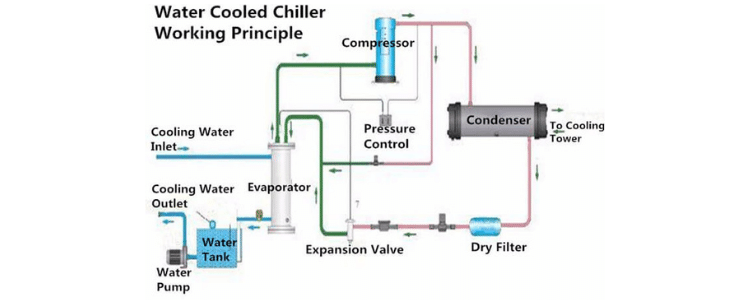
Chilled Water System Design
What Are Potential Drawbacks in Design?
While there notable benefits from using this system, you should also expect a few potential drawbacks with its use. There is a higher operating cost involved with the initial installation of the system. It requires the addition of other components such as condenser water pumps and cooling towers.

water cooled system components
It also requires more maintenance. The components are exposed to cooled chillers water, which can cause damage and corrosion over time. Hence, it should require a more stringent maintenance procedure to ensure that the system chiller works efficiently for longer.

Water Cooled Chiller System Design
How Efficient is Water Cooled Chiller Systems?
It is highly efficient. According to industry experts, its efficiency rating can range from 10 to 100 times better than traditional cooling systems. Therefore, a more sustainable option and also better for the environment.
Is It Complicate of the Chillers Water Cooled Chiller Systems?
No. The concept behind the use of a chiller is the same as any other, except for the addition of a few components such as the cooled chillers water pump and cooling towers. Therefore, it is not complicate to install, use, and maintain.
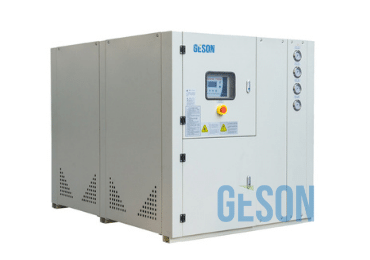
Water Chiller System
What Water Cooled Chiller Diagram to Install?
Unlike air chillers, the water systems can be installed in an indoor environment or any sealed room. It is the ideal option for those who need a cooling system but does not have access to an open space.

Water Cooled System Diagram
Do You Need To Cycle On And Off The Water Source?
No. You should keep the water supply going at all times. This is to ensure that the system continues to produce cooling effect without causing damage to the system. If the chiller is operating and there is no water, it can cause the coils to freeze. When this happens, it could crack or break. This could compromise the entire system.
What Is The Lifespan of Water Cooled Chiller Systems?
On average, the lifespan of chillers water cooled is longer than chillers air cooled. The actual lifespan will vary significantly depending on the usage and the maintenance done. Longer lifespan can also be different to the fact that they install indoors so expose the system to harsh environmental factors.

schematic diagram water cooled chiller system
How Do You Maintain chillers water cooled Systems?
Ongoing maintenance is an essential step so you can increase the efficiency of this system. If you install one for your business, it is important to implement best practices on facility management so it can last longer.
The basic step for maintenance involves inspecting and cleaning the condenser coils. You should also maintain the refrigerant charge to ensure proper cooling. Then, you must maintain the condenser water to ensure proper water flow.
Is Water Chiller More Energy Efficient Than Air Cooled Chillerss?
Yes. Unlike ambient air that can fluctuate, you can expect more stability from a water source. This makes it more efficient to operate in the long run.
How Do You Determine the Cooling Capacity for Project Purpose?
When you buy GESON China water chiller, Compare to air, water has the ability to remove heat 20 times faster. This means that there is a higher cooling capacity with the water chiller than the air cooled chillers. In terms of figure, you can expect 70% cooling capacity when you power the system (compared to only 30% for the air cooled chillers).
Which Type of China Water Chiller is Best For Your Facility?
It depends on what type of facility or building you want to install the cooling system for. For large or high-rise buildings, the water cooled system is the best option. It does not require an open space and it can generate more cooling power. The most common uses for the water chiller are airports, shopping malls, and other similar facilities.
On the other hand, air cooled chillers are best for those that have smaller space available for installation. Since the system is often installed outdoors, its lifespan is often compromised.
Does A Water Chiller Need A Cooling Tower?
Yes. Unlike air cooled chillers that do not need cooling towers, water cooled ones do. Depending on the water source, the cooling tower acts on it to remove any heat. Once the heat is removed, it can disperse cool air into a large space.
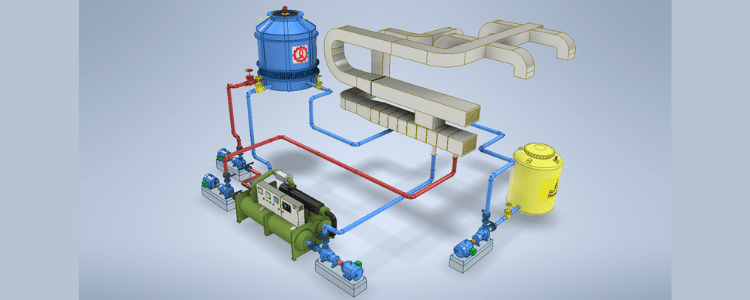
Water Cooled Chiller and A Cooling Tower
Can You Use It for An Commercial Buildings HVAC System?
Yes, chillers are now widely used in many air conditioning units. It does the same process as any type of chiller applications wherein the cooling towers remove the heat from the water. This enables the air conditioner to emit cool air from the fan coil units to cool the space.
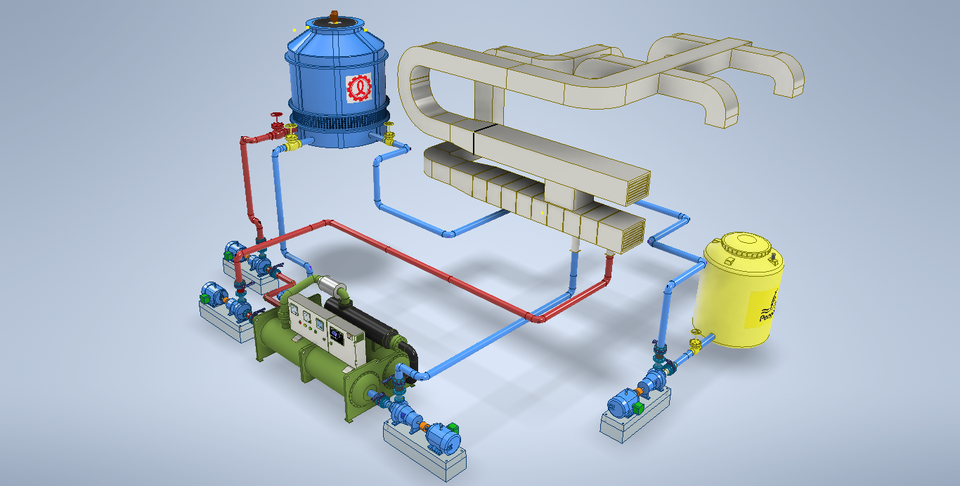
chiller cooling system
When to Choose Water Cooled Air Conditioners?
If you are looking for a cooling system that is energy-efficient and long lasting, choose water air conditioners. It also features quiet operation so it is perfect when you want to cool a room or building without causing a lot of disturbance.

Figure 3 water-cooled-chiller-tower
How Do You Troubleshoot A Water Cooled Chiller Sytem?
There are several common issues that could arise from the use of a water cooled chiller. It is important to know how to troubleshoot them.
When the chiller does not power up, it could be that there are some loose connections. Other possible causes would be that the power switch is “off”, or that a fuse might have been broken. Make sure to check these possible causes for an immediate fix.
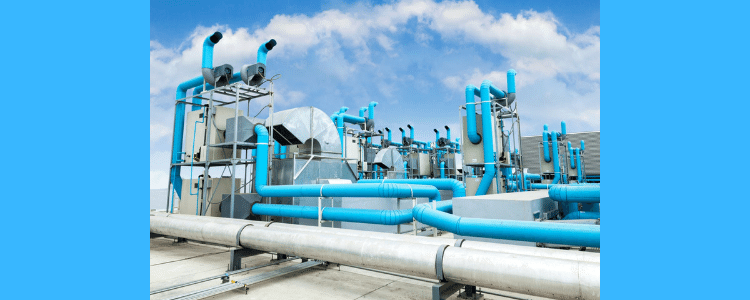
pipe water cooled chiller system
If there is insufficient water flow or it is not pumping water at all, check if the reservoir has enough water to supply the system. Make sure to check the process valve to ensure it is open or that none of the process lines are restricted. A failure in the pump must also be looked into.
Finally, if there is insufficient cooling produced by the system, check the refrigerant. Make sure there is no leak that makes it incapable of removing heat from the water source. You should also check the condenser or air filter to make sure that it is working properly.
Even when you maintain and inspect the chiller regularly, there are still issues that could arise. It is important to know the basic troubleshooting for the system so you can address the cause and ensure proper function.
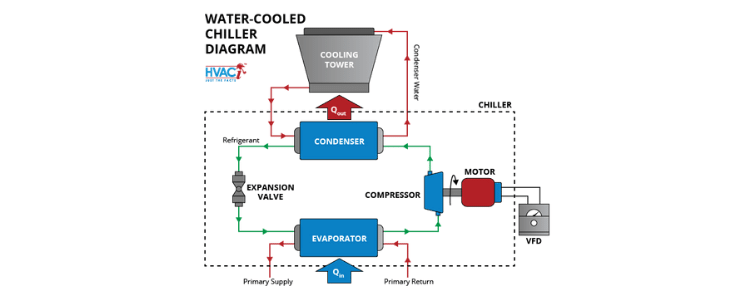
Water Cooled Chiller Diagram
What are The Common Applications of A Water Cooled Chiller System?
There are plenty of ways to use a water system. It plays a vital role in various industries such as keeping medical machines functioning properly. It is also valuable in the food processing industry in order to preserve meat and other perishable goods by keeping them in a cool storage.
Other industries that can benefit from the use of a water chiller system include the brewery industry, pharmaceutical industry, meat and poultry processing, and retail industry, among others.

Applications of A Water Chiller System
What is The Average Size for This Water Cooled Chiller?
You can find a variety of sizes for water chillers in the market. Choose the size you want according to the cooling capacity in need. Find smaller models that offer 20 ton capacity to larger models of up to a thousand-ton in capacity. Therefore, there are plenty of possibilities when it comes to their use since you can find different models to choose from.
Can You Use Them in An Outdoor Setting?
No. Water chillers are typically used in an indoor setting wherein it is protected from the elements. It does not require an open space like air chillers so it can be installed in an enclosed space or room.
The process of installation for the water system is more complex and time-consuming. However, the cost and effort to install it pays for themselves in the long run because you can enjoy more benefits and a longer lifespan.
Geson products line includes the following:
- Water-cooled screw compressor chillers from 50TR to 1,500TR
- Air-cooled screw compressor chillers from 50TR to 630TR
- Water-cooled scroll compressor chillers from 10TR to 100TR
- Air-cooled scroll compressor chillers from 10TR to 100TR
GESON Chiller Can Meet Your Needs.
Contact us today for industrial cooling solutions that will suit your needs and budget!