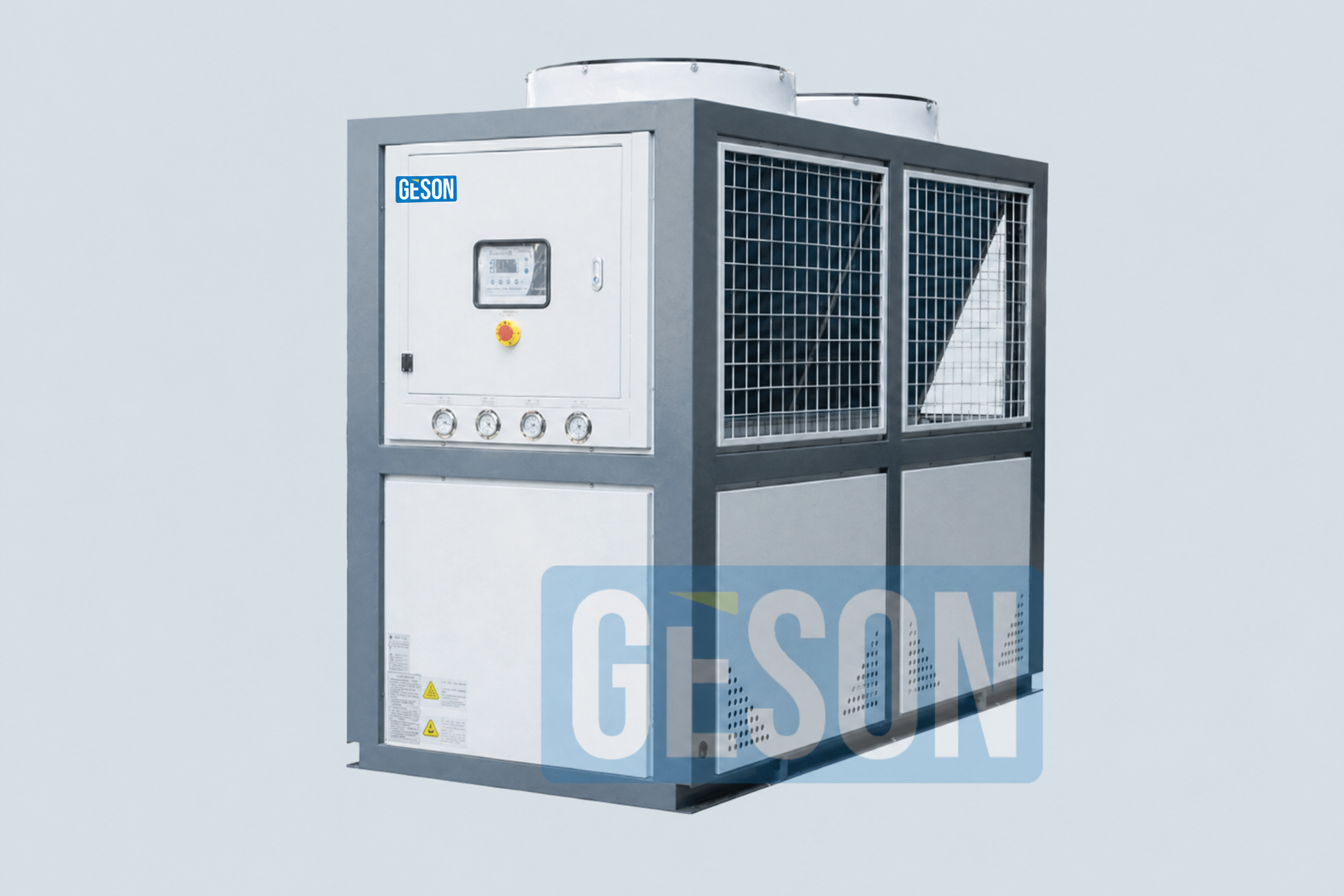
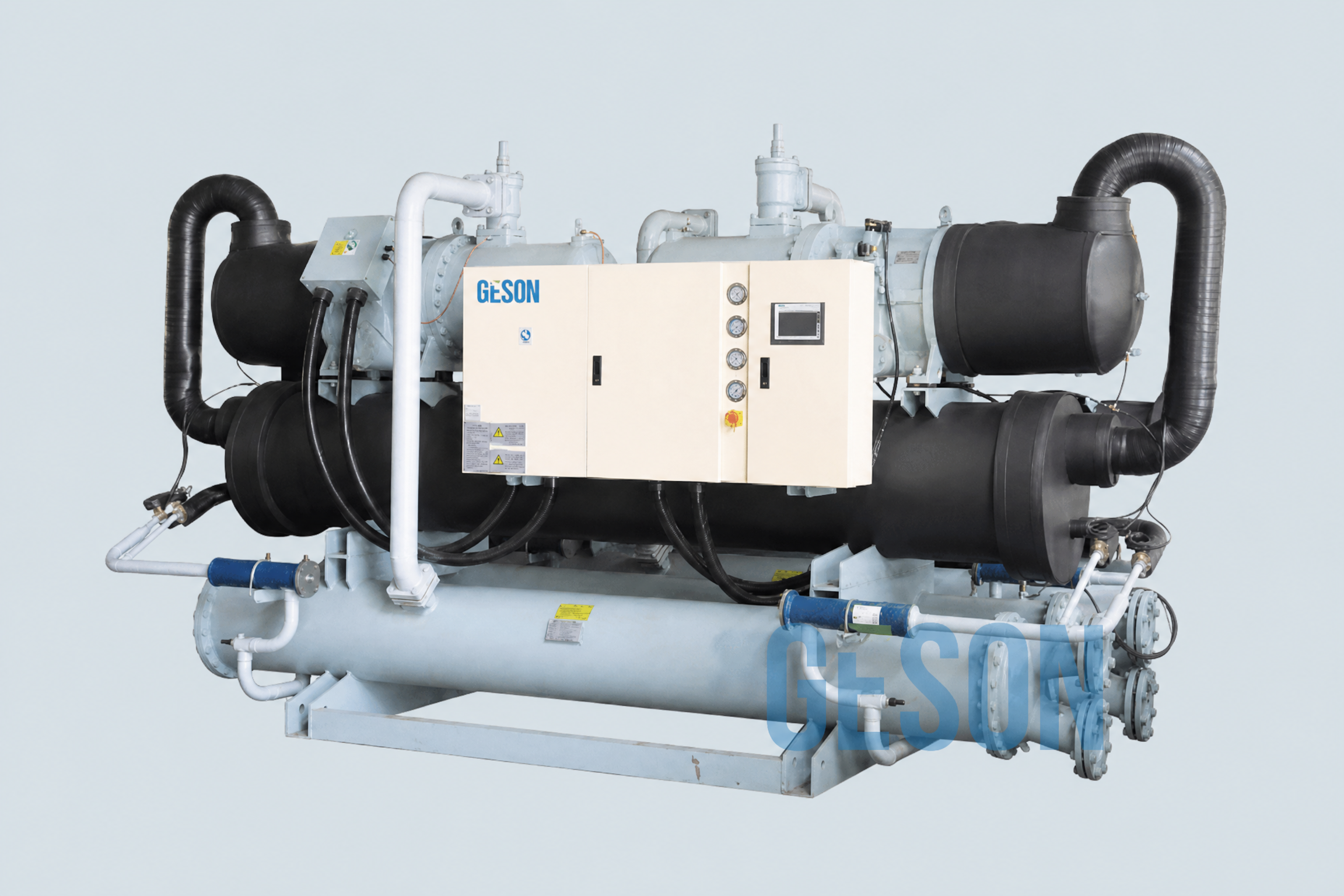
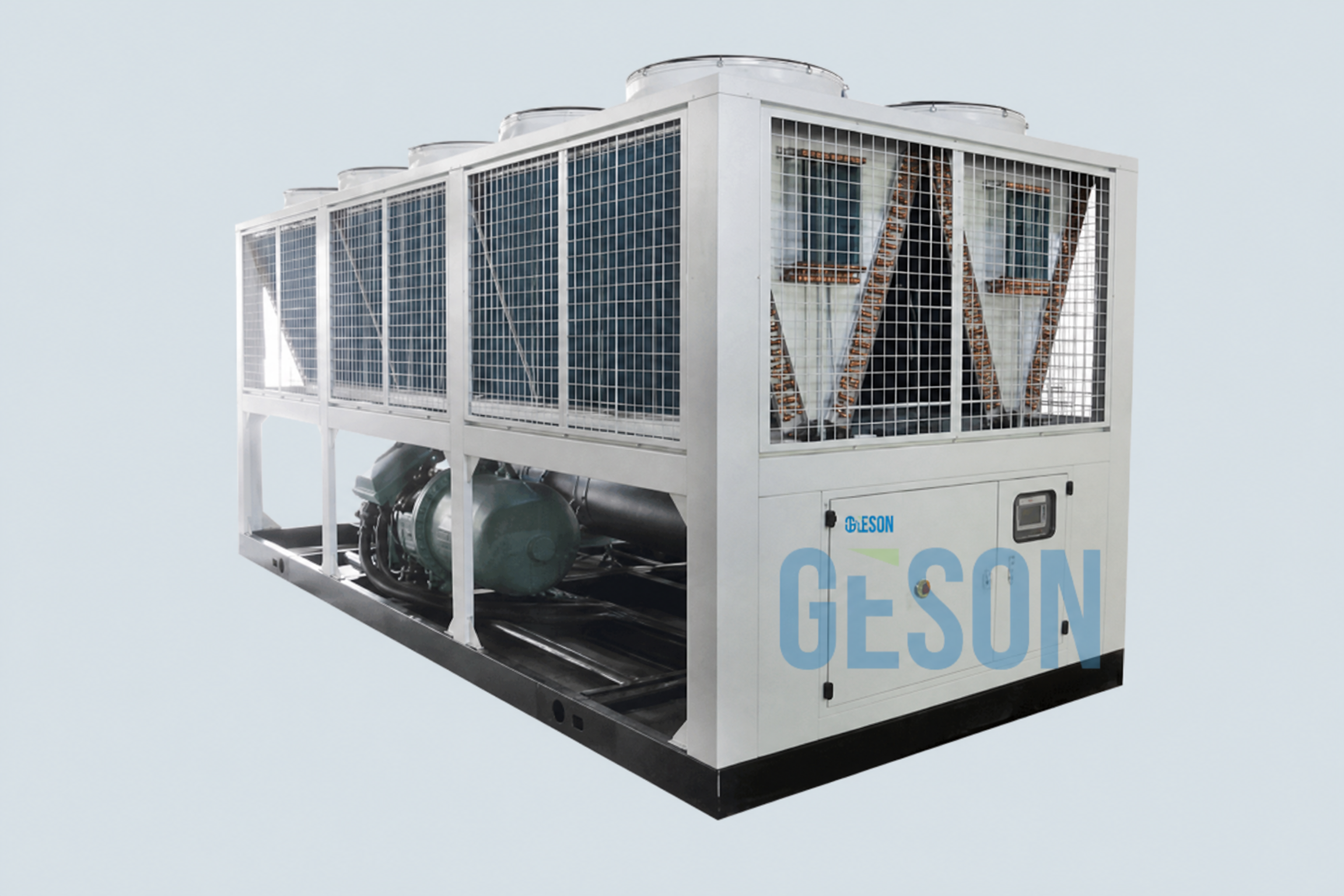
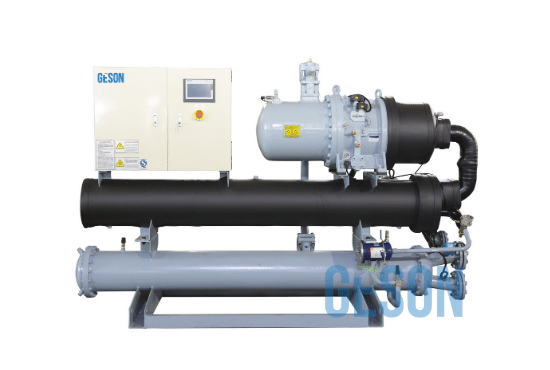
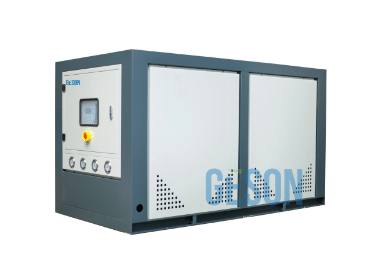
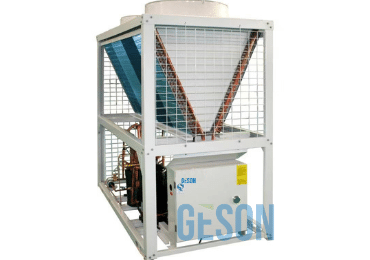
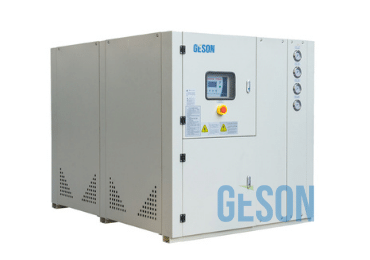
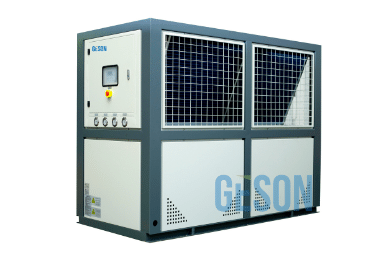
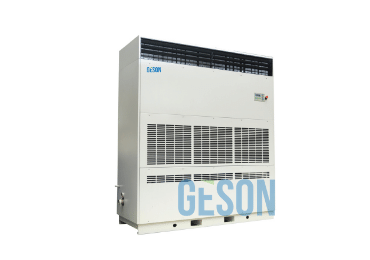
INDUSTRIAL WATER CHILLER MANUFACTURER FOR PROCESS COOLING.
Air-cooled, water-cooled and glycol chiller systems engineered for plastics, food and beverage, chemical, pharmaceutical, laser, data-center and other process-cooling applications.
Cooling capacities from 3 RT to 4500 RT, selected according to the application, temperatures, ambient conditions and utilities.
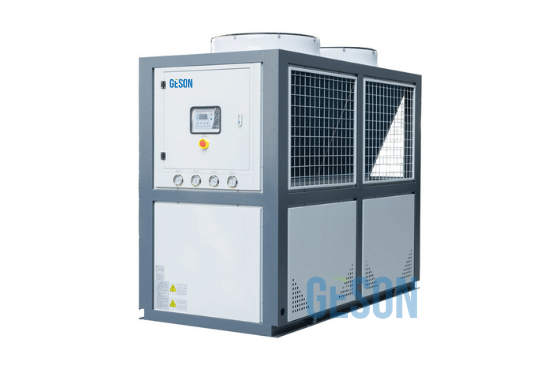
Choose from air-cooled and water-cooled scroll or screw chillers, glycol process chillers and customized cooling systems. Each system is selected according to cooling load, required water temperature, ambient conditions, power supply and application requirements.
PRODUCT / 01
INDUSTRIAL CHILLER
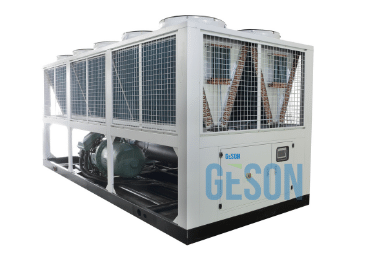
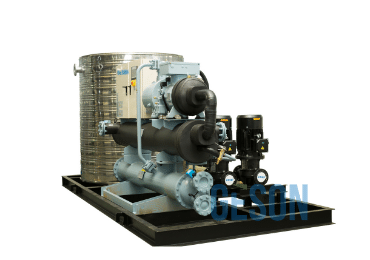
Water Cooled Screw Chiller 12/7℃
Cooling capacity ranges: 30~4500RT.
Loading adjusted 100%, 75%, 50%, 25%,0.
Available with R22/R134A/R407C/R410A and etc.
Failure-free operation >=40000hours.
Compact in structure, cover small area, save machine room space.
Are you looking for a professional water chiller manufacturer?
Geson Very Best Chillers is one of the leading China Chiller Manufacturers.
Geson chiller systems is leading manufacturer specializing on Industrial water chillers and commercial HVAC water chillers manufacturing for over 15 years.
Geson Chiller systems offer one-stop chiller system solutions with the highest quality and safest products to customers globally.
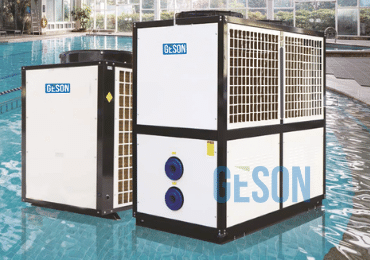
You can get a complete GESON chiller range from 3 Ton~4500 Ton. The -145℃~25℃ coolant-temperature range is available across all GESON chiller models.
Including Water-cooled chillers, Air-cooled chillers, Screw Chillers, Scroll Chillers, Centrifugal chillers, Water(ground) source heat pumps, Air source heat pumps, and etc.
Geson has been exported to the Americas, Europe, Middle East, Africa, Southeast Asia, and its, and was praised by customers all over the world.
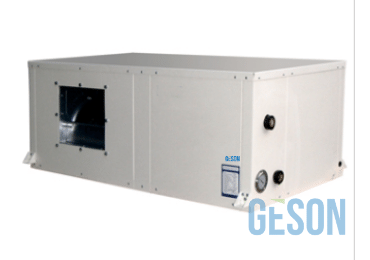
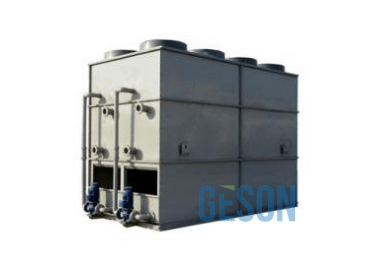
01Water-cooled chillers02Air-cooled process equipment chillers03Screw Chillers04Scroll Compressors chillers05Modular Chillers06HVAC Chillers07Industrial Water Chillers08Air Cooled Screw Chiller09Air Cooled Scroll Chiller10Packaged Chiller Systems11Centrifugal chillers12Liquid Chillers13Evaporation Cooled Chillers14Water(ground) source heat pumps15Air source heat pumps16Swimming Pool Heat Pumps, Swimming Pool Chillers and etc.
APPLICATIONS
Plastic-Industrial-Injection- Molding-chillerPlastic Processing Blowing-Molding-chillerWelding Equipment industrial process chillersChemical Industrial Processes chillersPharmaceutical Formulation Industrial Processes Cooling Applications ChillerFood and Dairy Production process cooling equipmentBeverage Process Cooling ChillerMRI-and-Laser-chillerComputer-Data-Center-chillerBeer-and-Wine-Fermentation-chillerGlycol-Beer-ChillerGlycol Cooling SystemHVAC Split Units ChillerHospital-Central-chillerHotel-HVAC-chillerCampuses-HVAC-chillerSwimming-Pool-chillerMetal finishing industries ChillerVegetable-and-meat-cold-room-strorage-chiller
Quality and service
YOUR TOP QUALITY CHILLERS MANUFACTURER IN CHINA.
Professional Model Selection with Over 15 Years Manufacturing Experience
You will get a professional excellent solution from our Geson experienced engineering team. Our engineering team reviews the application, cooling load, operating temperatures, site conditions and utilities before recommending a system.
Reach the Best Solution.
Your benefit is our responsibility. High-efficiency Communication will create the value for you.
01
Standardized Production Management
Exceed your expectation quality, strict QC control on each manufacturing process point.
02
Strict Quality Testing
National glass sophisticated testing laboratory, 47 times process inspection, manufacturing inspection, quality inspection, operating testing, pre-delivery inspection.
03
Just in Time and Safety Delivery
The lead time is 30 working days. GESON uses professional delivery companies, transportation insurance and wooden-case packaging to support safe delivery.
04
Prompt After-sale Services
Answer the customer’s phone within 30 minutes to respond, 2 hours to give a solution, 24 hours to arrive at the scene, 48 hours to get a return call. Ensure you get the best quality of service.
High Quality Components Ensure Your Top Quality Chiller
COMPONENT / 01
01
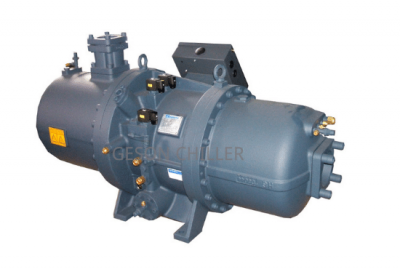
Top Quality Screw Compressor With Certificate
Adopts Famous Brand Compressor; Semi-hermetic 5:6 Screw Compressor; GESON States Compressor Energy Efficiency is 20%~30% Higher Across All Chiller Models; Available with R134A/R407C/R410A/R510A and etc. 40000 Hours of Trouble-free Operation. Screw Compressor has Approved ISO9001, CRAA、CE、PED、UL Certification;
COMPONENT / 02
02
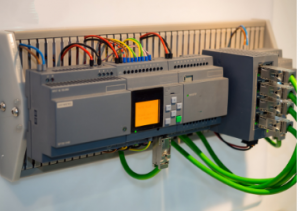
Reliable Microcomputer Control System
PLC Programmable Controller; LCD Touch Temperature Control; Automatic Detection of Chilled Water Outlet Temperature; Automatic Detection of Operating Conditions; Automatically Record the Alarm and Send Trouble Alarm; Can Realize Remote Control; Reserve RS-485 Communication Interface, or Ethernet Port; Customize Display Language: Chinese, English, Russian, Spanish; Variable Frequency Drives Include a local control panel, remote control panel, fault indicators, and temperature indicators and pressure indicators.
COMPONENT / 03
03
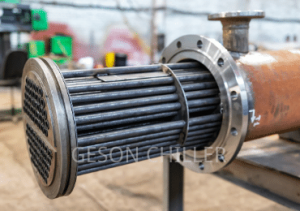
High-efficiency Shell and Tube Heat Exchangers
Low Maintenance Cost, Easy Operation; Long Cleaning Cycle and Convenient Cleaning; Fast Heat Exchange Speed; High-Temperature Resistance 400℃; High-Pressure Resistance 2.5Mpa; Can be Used Under High Temperature and High Pressure. Adopts Copper Tube with Rolled Fins on the Outer Surface, Which Has High Thermal Conductivity and Large Heat Exchange Area; Long Service Life Up to More Than 20 Years;
COMPONENT / 04
04
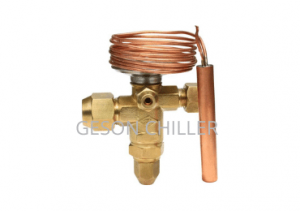
Brand Refrigeration Components:
Famous Brand Expansion Valve; Brand Filter Drier; Has Electronic Expansion Valve Or Thermoexpension Valve. Ensure the Stable Operation of the Industrial Water Chiller Unit.
COMPONENT / 05
05
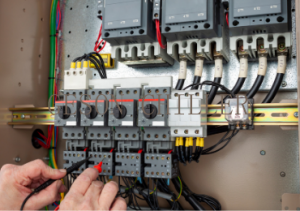
Top Quality Electrical Components:
Famous Brand A.C Contactor, Relay, Thermal Protector, Brand Pressure Controller, Filter Drier to Ensure the Reliability of the Industrial Water Chiller Unit
COMPONENT / 06
06
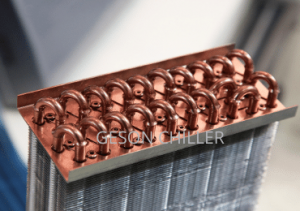
High-Efficiency Copper and Aluminum Fins Condenser:
Heat Transfer Performance is Good, Stable, Air Resistance is Small. Enhance the Efficiency of the remove Heat Exchanging. High efficiency copper pipe and aluminum fins heat exchanger.
A water chiller system lowers the temperature of water for industrial processes and HVAC applications. It uses water/glycol in a closed-loop system to help heat the exchange of water. Very best chillers follow the rule of vapor compression and absorption. It means the conversion of chiller liquid into gas, and gas into a liquid. In a water chiller system, a chiller takes away heat from water through a refrigeration cycle. The extra heat goes into the atmosphere and cools down the water.
What Is the Difference Between an Air-Cooled and Water-Cooled Chiller?+
A chiller is a device that works by absorbing heat from the air and rejecting it to the environment. It does this by using a process called refrigeration. A chiller can be either an air-cooled or water-cooled system. Air-cooled chillers reject condenser heat directly to ambient air. Water-cooled chillers reject heat through a condenser-water circuit, normally connected to a cooling tower. The right configuration depends on cooling capacity, ambient conditions, water availability, installation space and operating requirements.
What is a Water Cooled Chiller?+
Water Cooled Chiller also called a water cooling chiller, chilled water chiller, water to water chiller, water cooled chillers systems, cold water chiller. Sometimes, a water cooling chiller only means the water-cooled chiller. Anyway, different names according to the users’ habits.
What is the Difference between the Air Cooled Chillers and Water-Cooled Chiller?+
Air-Cooled Chiller: In an air-cooled chiller, the condenser of your chiller uses ‘air’ to remove the heat. It requires a high energy supply for working. You can use an air-cooled chiller for indoor installation. Water-Cooled Chiller: The condenser uses water, water/glycol or, other secondary refrigerant to eliminate the heat in a water-cooled chiller. It also connects with a cooling tower. You can use water-cooled chillers for outdoor installation. Besides, water cooled-chiller uses less energy than the air-cooled chiller.
What is Industrial industrial process chillers?+
In industries, industrial chillers use for controlled cooling of products, factory machinery, and mechanisms. You can use a water chiller for industrial purposes. Also use it for the plastic industry Injection Molding Chillers, paper or cement industry, food, and beverage processing, welding equipment, chemical processing vacuum system, Icer Rink Chiller and power generation stations. And usually consider it for cooling high-heat specialized things such as lasers and MRI machines.
What is the Meaning of Water Cooled Screw Chiller?+
Water-cooled screw chillers are also a chiller because of its principle components using a screw compressor, so names as a water-cooled screw chiller. You can use them in several industries, such as: Electronics; Printing; Electroplating; Chemical industry; Food processing industry; Shopping malls; Hotels; Factories; Hospitals. Other central air-conditioning projects require chilled water in central AC system.
What are the Benefits of the Water Chiller for Hydroponics?+
Effective hydroponic water chillers maintain the optimum temperature to preserve the well-being of your grows. The water chiller systems provide the best temperature essential to provide a high quantity of dissolved oxygen to your plants. Increase the root growth and nutrient absorption. The risk of pathogen attacks also decreases due to the high oxygen level. A water-cooled chiller operates no matter what setup (drip, nutrient film technique) you have. Offer more precise control for your hydroponic plants. You can set them up at any specific temperature. Interestingly, you require less time and work. You can use utilize a water chiller as easy as flipping on a switch.
How to consider the best China Water Chiller manufacturer in China?+
You can look for a water-cooled chiller in GesonChiller. However, the following are some points to consider the best water-cooled chiller: Authentic customer opinions; Effective customer feedback; A customer service expert helps you get a detailed overview of the product; Authenticated customer’s reviews; Independent reviews.
How is the Air-Cooled Chiller better than a Water-Cooled Chiller?+
Air-cooled chiller requires more energy to work than the water-cooled chiller. You get some other benefits from an air-cooled chiller such as safety, quiet operation, less space needed, longer working span, and energy efficiency. These benefits help you to buy an air-cooled chiller than the water-cooled chiller.
What are the Factors to consider for sizing the Water Chiller?+
There are many essential factors that you must consider when sizing a chiller. These include: Glycol concentration; Outlet water temperature; Ambient temperature; Elevation above sea level.
How is the Water Chiller cost-effective?+
The COP of water-cooled chiller is about 5.2, and air-cooled chiller COP is about 4.3. Water cooled chiller lifetime is about 15~20years,air-cooled chiller is about 7~15 years. Hence, water chillers transfer more heat. Therefore, it can add worth to your business by decreasing the cost of energy.
What are the Applications of Integrated Water-Cooled Chiller?+
The integrated chiller system is similar to a standard water-cooled chiller, except that it adds a parallel condenser. The system uses a combination of water-cooled and air-cooled chillers to provide your building cooling throughout the years. You can use its tower to remain drained and idle during the cold weather months. This way, you can solve the issue of the water-cooled chiller in an intense atmosphere.
What are the Advantages of a Water-Cooled Chiller?+
Less area needed: Your water-cooled chiller remains inside buildings. You can also use a water chiller if you don’t have enough space outside your building. Silent operation: Water-cooled chiller doesn’t make a noise because they don’t have ducts and vents like air-cooled chillers. Effective lifespan: Your water-cooled chillers don’t face outside environmental factors snow, ice, heat, and rain. Safer to use: Water-cooled chillers usually use fluids (e.g. water, brine, and glycol) instead of lethal chemicals. Energy-efficient: Your water chillers are energy-efficient than air-cooled chillers.
What are the Disadvantages of a Water-Cooled Chillers?+
Higher cost: Your water-cooled chillers cost higher than air-cooled chillers. Water-cooled chillers require extra parts, such as water cooling tower, and water cooling pumps. Complicated installation: The additional parts in your water-cooled chiller also make installation more of a hassle. Mechanical room needed: Your business needs to have a separate mechanical room to run water-cooled chillers. Not good for the drought-driven area: Water-cooled chillers aren’t useful if you live in a region of water shortage.
What is the Difference between the HVAC Chiller ad industrial process chillers??+
HVAC Chiller: You can use a Heating, Ventilation, and Air Conditioning (HVAC) system to cool and dehumidify the commercial building. Also use the HVAC chiller system to modify the temperature regulation for a broader range of environments, including industrial manufacturing and residential buildings. Process Chiller: A process chiller is a thermal machine that Provide cooling to an industrial process. However, you can use an industrial chiller to directly handle several manufacturing processes, such as a brewery cooling, hydroponic cooling, and plastic cooling.
What is the Water Chiller Price?+
Generally speaking, the water cooled chiller price is cheaper. But there is no the cheapest water chiller. But it needs an additional water cooling tower system. There are types of water chiller for sale. 1 ton ~1000 litre water chiller model. If you need more about water chiller price or find the best water chiller. Welcome to consult us to know the water chiller 1000 liter price.
Which Models Mini Water Chiller is the Most Popular?+
The most popular mini water chiller is small size. Contact us to learn more about: 1 ton water chiller; 2 ton water chiller; 3 ton water chiller; 5 ton water chiller; 10 ton water chiller. 1 ton water chiller price; 2 ton water chiller price; 3 ton water chiller price; 5 ton water chiller price; 10 ton water chiller price.
How much does an Industrial Water-Cooled Chiller cost?+
An air-cooled chiller can typically cost you around hundreds of dollars per ton. Industrial Water-cooled chillers are cheaper. But, your water chiller needs additional water cooling tower and pump cost, need machine room cost, need installation labor cost. However, you may feel comfortable to ask any questions and contact us.
What is Industrial Water Chiller?+
An industrial chiller is a kind of efficient refrigeration machinery. Specialized industrial chillers can meet the temperature required for product production. In industrial manufacturing, in order to obtain high-efficiency industrial production efficiency and quality, a low-temperature production environment is required. GESON is a professional industrial chiller manufacturer in China, welcome to contact us for the industrial chiller selections.
What Types Industrial Water Chiller Has?+
Industrial water chillers can be classified: air-cooled chillers, water-cooled chillers, and screw chillers scroll chillers.
What Applications does Industrial Water Chiller Has?+
GESON industrial chillers can be divided into different types, and their application range is also relatively wide. Industrial chiller equipment can be widely used in various industrial production, suitable for: Plastic industry, Mold industry, Injection Industry, Extruding Industry, Electroplating Industry, Electronics Industry, Chemical Industry, Chemical Fiber, Pharmaceutical Industry, Metal Electroplating, Food Industry, Preservation Industry, Ice Rink Chiller, Various Air Conditioning HVAC Chiller Equipment.
What is Evaporation Cooled Chillers?+
Evaporative cooling chiller Group consisting of refrigeration compressor, evaporative cooling condenser, throttle valve and The evaporator is connected in turn to form the circuit of the refrigerant, and the evaporator Cooling condensers include finned precoolers, condensing coils, and cooling Condensing fan, spray water pump and water sprayer. The evaporation cooled chillers function integrates two heat exchange forms of air cooling and water cooling, and the heat exchange efficiency is Increase by 25%, increase cooling capacity by 15%, and reduce chiller power consumption by 7-8%.
Chiller Size Calculator
Estimated Chiller Size (Ton) *1 Ton = 3.517 kw, 1kw = 0.2843 Ton
Cooling accounts for up to 70% of the injection moulding cycle time. Choosing the right chiller — correct capacity, temperature setpoint, and configuration — directly affects your production output, part quality, and operating cost. This [...]
March 31st, 2023 | Comments Off on Chiller Refrigerant Charging: Methods and Safety
Industrial chiller refrigerant charging is a measured commissioning procedure, not a process of adding refrigerant until one pressure, current or sight glass “looks right.” The correct method depends on the chiller model, refrigerant, circuit design, [...]
Contact Us
CONTACT US.
We have 15years of Water/Air Cooled Chiller Manufacturing experience and have a professional R&D Engineering team.
You can get a one-stop process cooling solution from us.
3~4500RT capacity and -140~25℃ outlet temperature can be chosen.