Chiller Cooling System Working Principle

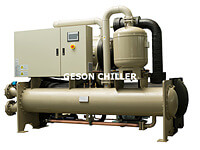
A chiller cooling system does not “make cold.” It removes heat from water or another process fluid, then rejects that heat somewhere else. In a vapor-compression chiller, the refrigerant passes through four core components: evaporator, compressor, condenser, and expansion device. The chilled-water circuit carries heat from the [...]

2026-08-09T13:11:43+00:00Introduction to Water Chillers|Comments Off on Chiller Cooling System Working Principle

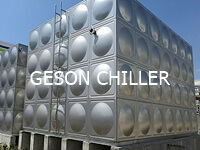
Why use a buffer tank in the air heat pump heating/cooling system?

The function of the buffer tank 1. If the buffer water tank is not used, the water chiller will frequently start and stop. Due to the limited amount of circulating water in the loop, it will cause the water chiller to reach the design temperature in a [...]

2023-07-13T14:39:10+00:00Case Studies and Success Stories, Introduction to Water Chillers|Comments Off on Why use a buffer tank in the air heat pump heating/cooling system?

Chemical Chiller Systems for Process Cooling

A chemical chiller removes process heat through a controlled recirculating fluid loop. It can serve reactor jackets, mixing vessels, condensers, extraction equipment and other chemical-process heat exchangers. Correct selection starts with the process heat load and required fluid temperature—not reactor volume or nominal chiller tonnage alone. GESON [...]

2026-08-11T08:02:48+00:00Case Studies and Success Stories, Industrial Chiller Applications|Comments Off on Chemical Chiller Systems for Process Cooling
Go to Top