
Your Expert Air Cooled Chillers Manufacturer
As a professional air cooled chillers manufacturers in China,
Geson Chiller supply a wide range of screw and scroll chillers, capacities, and environment-friendly refrigerant options at a competitive price.
GESON air cooled Chillers types:
l Air-cooled screw chiller: 20TR~570TR (70KW~2000KW)
l Scroll Air cooled chillers: 3TR~80TR (10KW~280KW)
l Air-source heat pump unit: 20TR~570TR (70KW~2000KW)
GESON has 15 years of experience in the research and manufacturing of air cooled chillers.
And has an experienced R&D team. Can customize the cooling capacity as your project requirements.
If you have more questions on Air Cooled Chillers, free to contact us
Your Expert Air Cooled Chillers Manufacturers
- One-stop air cooled chillers solution for your project.
- Air-cooled screw chiller, air cooled scroll chiller and integrated air chillers.
- Ranges from 3ton~4400ton.
- Chilled water temperature from -5℃~30℃.
- Meet your various requirements.
- Adopts Famous Brand Compressor;
- Semi-hermetic 5:6 Screw Compressor;
Compressor Energy Efficiency is 20%~30% Higher;
Available with R134A/R407C/R410A/R510A and etc. - 40000 Hours of Trouble-free Operation
- Screw Compressor has Approved ISO9001, CRAA、CE、PED、UL Certification;
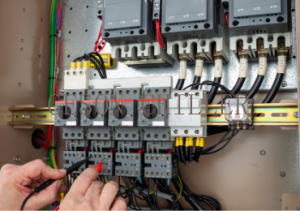
- Equipped with Hanbell/Copeland compressors & Siemens/Schneider electrical components.
- Support Custom Voltage: 3P-440V-50HZ / 3P-400V-50HZ (Successfully delivered to Europe and Middle East).
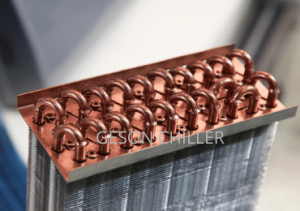
- Evaporator copper tube thickness: 1.0mm; Condenser copper tube thickness: 0.41mm (Ensures 10+ years lifespan);
Main Products

- 20TR~570TR (70KW~2000KW)
- -5C~20C Chilled water temperature
- Semi-hermetic screw compressor
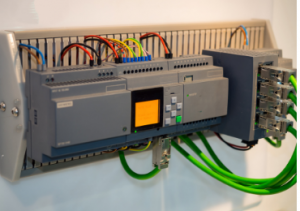
- SIEMENS PLC controller
- R22/R134A/R407C/R410A options

- 3RT-60RT Capacity
- 15℃ Outlet Temperature
- Package Design
- No Need Cooling Tower
- Easy to Installation

- 1RT-80RT Capacity
- 15℃ Outlet Temperature
- Built-in Water Pump/Tank
- No Need Cooling Tower
- Easy to Maintenance
All Types of Industrial Water Chiller Products
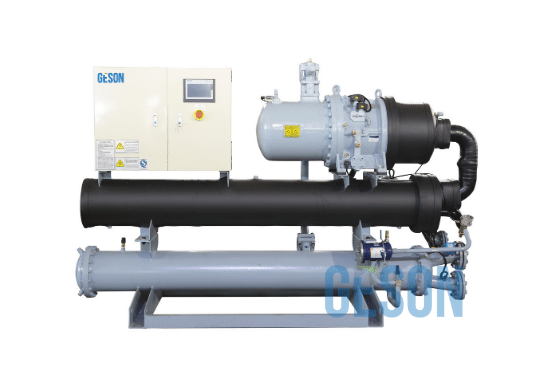
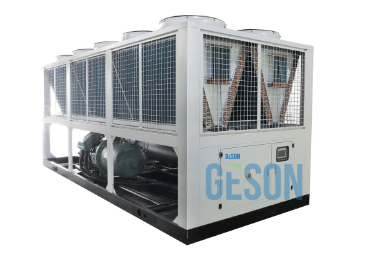

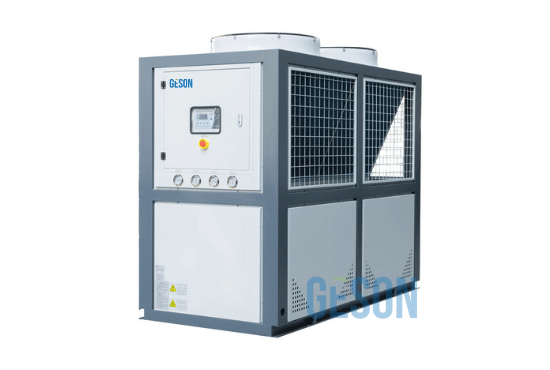

Modular Air Chiller

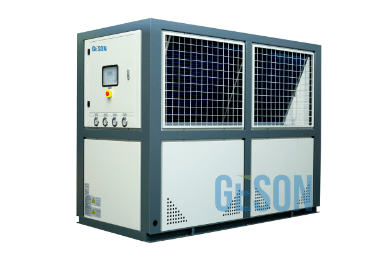
Air Source Heat Pump

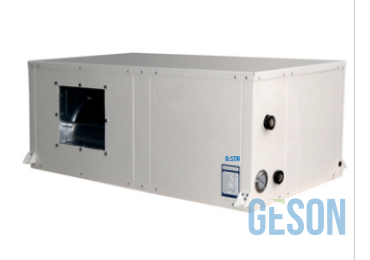
Water Source Heat Pump
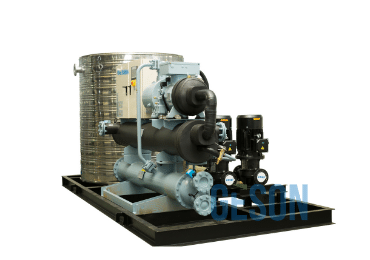
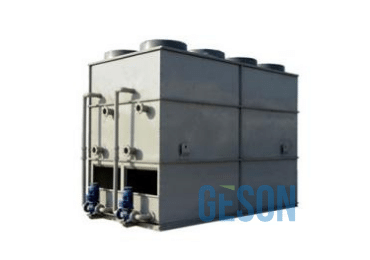
Water Cooling Tower

Air Coditioning Chiller
Your Top Quality Chillers Manufacturer In China
Top Brand Components
Ensure Your Top Quality Chiller
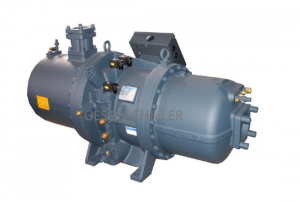








GESON Air Cooled Chiller — Complete Buyer’s Guide
Geson manufactures air cooled chillers from 2RT to 300RT for industrial process cooling and commercial HVAC applications. Available in scroll compressor configurations (2RT–100RT) and screw compressor configurations (50RT–300RT). All units factory pressure-tested and run-tested before delivery. Lead time: 30 working days.
Air Cooled Chiller Specifications
| Parameter | Specification |
|---|---|
| Cooling capacity range | 2RT to 300RT (7kW to 1,050kW) |
| Chilled water supply temperature | Standard: 5°C to 25°C | Low temp: −15°C to 0°C |
| Standard chilled water in/out | 12°C / 7°C (customisable) |
| Refrigerants available | R407C, R134A, R410A, R454B, R513A, R22 |
| Compressor brands | Copeland, Hanbell, Bitzer, Danfoss, Invotech, FUSHENG |
| Voltage options | 3P-380V-50Hz | 3P-400V-50Hz | 3P-440V-50Hz | 3P-460V-60Hz | custom |
| Condenser type | Air-cooled fin and tube — copper tubes, aluminium fins |
| Evaporator type | Shell and tube — copper tubes standard; SS316L tubes optional |
| Control system | PLC + LCD touchscreen, RS-485/Ethernet, remote monitoring |
| Energy adjustment | 100% / 75% / 50% / 25% / 0% step loading (scroll); stepless VFD (screw) |
| Ambient temperature range | Standard: up to 43°C | High-ambient design: up to 50°C |
| Installation | Outdoor or well-ventilated indoor space — no cooling tower required |
| Lead time | 30 working days standard |
Air Cooled Chiller Product Range
| Model Series | Compressor Type | Capacity Range | Best For |
|---|---|---|---|
| GS-AS Series (Air-cooled Scroll) | Copeland / Danfoss / Invotech scroll | 2RT – 100RT (7kW – 350kW) | Plastics, laser cooling, hydroponics, small HVAC, process cooling |
| GS-AD Series (Air-cooled Screw) | Hanbell / Bitzer / FUSHENG screw | 50RT – 300RT (175kW – 1,050kW) | Large industrial process cooling, food processing, HVAC central plant, oil & gas |
| GS-AFL Series (Air-cooled Box) | Scroll compressors, compact box design | 10RT – 100RT | Outdoor installation, remote sites, easy transport |
Industry Applications
| Industry | Application | Typical Capacity |
|---|---|---|
| Plastics manufacturing | Injection moulding, extrusion, blow moulding — mould and barrel cooling | 10RT – 150RT |
| Food & beverage | Process cooling, ingredient temperature control, packaging line cooling | 20RT – 300RT |
| Animal feed industry | Pellet cooling, mixer cooling, process temperature control | 20RT – 150RT |
| Hydraulic systems | Hydraulic oil cooling for presses, injection machines, CNC equipment | 5RT – 50RT |
| Vacuum pump cooling | Cooling water supply for industrial vacuum pump systems | 5RT – 30RT |
| Laser cutting & welding | Laser resonator cooling, beam delivery cooling, ±0.5°C precision | 2RT – 30RT |
| Medical equipment | MRI cooling, medical laser cooling, laboratory equipment | 5RT – 50RT |
| Commercial HVAC | Office buildings, hotels, retail — chilled water for fan coil units and AHUs | 50RT – 300RT |
| Hydroponics | Nutrient solution temperature control for indoor growing facilities | 2RT – 20RT |
| Animal farming | Poultry house cooling, livestock facility temperature control | 10RT – 100RT |
| Oil & gas | Process cooling for gas compression, petrochemical equipment cooling | 20RT – 300RT |
| Essential oil distillation | Condenser cooling for steam distillation processes | 50RT – 300RT |
Real Project References
| Year | Country | Industry | System Supplied |
|---|---|---|---|
| 2026 | Portugal | Essential oil distillation | 2 × air cooled screw chiller 530kW/151RT each, circulation pumps + 10m³ insulated tank, skid-mounted system. Sourced via website inquiry. |
| 2025 | Italy | Industrial process cooling | Air cooled screw chiller 800kW/227RT, Hanbell compressor, 125 external circulation pump + 10m³ insulated tank |
| 2025 | Madagascar | Industrial process cooling | Air cooled screw chiller 700kW/199RT + 5,000L insulated water tank |
| 2025 | Ireland | Food industry | Air cooled screw chiller 320kW/91RT, R134A, 3P-400V-50Hz, variable frequency drive |
| 2024 | Vietnam / Sri Lanka | Industrial process cooling | Air cooled screw chiller 195kW/55RT |
| 2024 | Azerbaijan | Oil & gas industry | Air cooled box chiller 65.4kW/18.6RT |
| 2020 | Russia | Plastics extrusion | Air cooled scroll chiller 65.4kW/18.6RT, R22, 3P-380V-50Hz, for extrusion machine 800kg/h production capacity |
All projects supplied with factory test records, operation manuals, and spare parts documentation. Remote commissioning support and 24/7 technical assistance provided after installation.
Why Choose an Air Cooled Chiller?
| Factor | Air Cooled Chiller | Water Cooled Chiller |
|---|---|---|
| Installation | Simple — no cooling tower, no condenser water pump | Requires cooling tower + condenser pump |
| Upfront cost | Lower — fewer components | Higher — cooling tower adds cost |
| Water consumption | Zero — air only | Cooling tower evaporation loss |
| Outdoor installation | Yes — designed for outdoor use | No — indoor mechanical room required |
| Maintenance | Simpler — no cooling tower or water treatment | More complex — water treatment required |
| Best ambient temp | Up to 43°C standard; 50°C high-ambient design | Not affected by outdoor temperature |
| Energy efficiency | Slightly lower COP than water cooled | Higher COP — 20-30% more efficient |
| Best for | Sites without water source, smaller projects, outdoor installation | Large capacity, indoor installation, high ambient |
How to Get a Quotation
To receive a formal quotation within 24 hours, provide:
- Cooling capacity required — kW or RT
- Chilled water supply and return temperatures — e.g. 7°C/12°C
- Ambient temperature — maximum outdoor temperature at the installation site
- Power supply — voltage, frequency, phases (e.g. 3P-380V-50Hz)
- Application — what process or equipment the chiller will serve
- Any special requirements — food grade, low temperature, variable frequency drive, specific refrigerant
Contact Geson engineering team →
WhatsApp: +86 138 5195 0629 | Email: info@gesonchiller.com
Frequently Asked Questions
What is the price of an air cooled chiller?
Air cooled chiller pricing depends on cooling capacity, compressor type, refrigerant, and any special requirements. Air cooled chillers are generally less expensive than water cooled chillers of the same capacity due to the simpler system — no cooling tower or condenser pump is needed. Contact Geson with your specific requirements for a formal quotation within 24 hours.
What compressor brands does Geson use in air cooled chillers?
Geson air cooled chillers use Copeland, Hanbell, Bitzer, Danfoss, Invotech, and FUSHENG compressors depending on capacity and application. Copeland and Danfoss scroll compressors are used in smaller units (2RT–100RT); Hanbell and Bitzer screw compressors are used in larger units (50RT–300RT).
Do air cooled chillers need a cooling tower?
No. Air cooled chillers reject heat directly to the outdoor air via the condenser fan — no cooling tower, no condenser water pump, and no water treatment system is needed. This makes installation simpler and significantly reduces upfront cost compared to water cooled systems.
What is the maximum ambient temperature for a Geson air cooled chiller?
Standard Geson air cooled chillers are designed for ambient temperatures up to 43°C. A high-ambient design is available for installations in climates up to 50°C — this requires a specially configured condenser and fan system. Always specify your maximum ambient temperature when requesting a quotation, particularly for Middle East, North Africa, and Southeast Asia installations.
What refrigerants are available?
R407C, R134A, R410A, R454B, R513A, and R22 (for legacy systems). R410A and R407C are the most common choices for standard process cooling. R454B is the recommended choice for new equipment under EPA AIM Act regulations. R134A is preferred for variable frequency screw chiller configurations. Specify your required refrigerant or regional regulations when ordering.
What is the lead time for a Geson air cooled chiller?
Standard configurations: 30 working days. Custom configurations or units requiring special components: 45–60 working days. Delivery by sea to most ports worldwide; wooden case packaging with transportation insurance included.
Can Geson supply a complete system with pumps and tank?
Yes. Geson supplies complete air cooled chiller packages including the chiller unit, chilled water pump(s), insulated buffer tank, Y-strainers, isolation valves, and integrated electrical control panel — skid-mounted and factory-tested as a complete system. This is popular for customers who want to minimise on-site installation work.
What is the difference between an air cooled scroll chiller and screw chiller?
Scroll chillers (2RT–100RT) use multiple scroll compressors in tandem — simpler, quieter, and easier to maintain, ideal for smaller applications with stable loads. Screw chillers (50RT–300RT) use twin-screw compressors with stepless capacity modulation via variable frequency drive, delivering better part-load efficiency for larger applications with variable cooling demand.
What is the minimum order quantity?
MOQ is one unit. You can order a single chiller or any quantity required.
Related Products
- Air Cooled Screw Chillers — 50RT to 300RT
- Air Cooled Scroll Chillers — 2RT to 100RT
- Water Cooled Chillers — 3RT to 1,000RT
- Water Cooled Screw Chillers — 50RT to 1,000RT
- Glycol Refrigeration Systems
- Process Chillers vs HVAC Chillers
- Contact Geson Engineering Team
- Injection Molding Chillers — Skid-Mounted Package, 2RT to 200RT